
EXC: Democrats Have Been Quietly War-Gaming AI for ‘Tactical’ Protests, Modeled On Military Systems


While the public debates artificial intelligence in terms of job losses, chatbots, and election ads, Harvard has been working on something far more consequential: how to weaponize AI for protest movements.
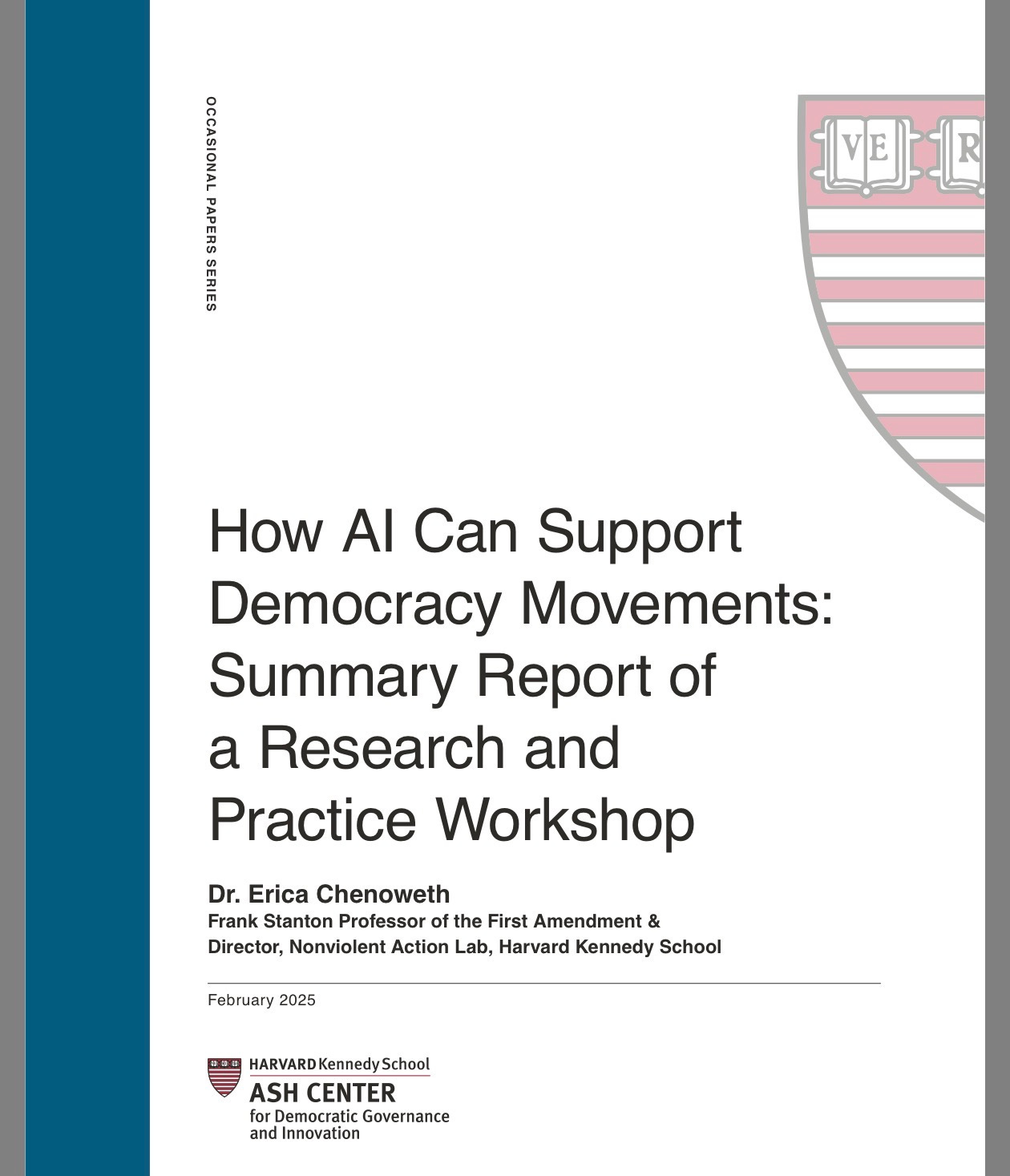
In December 2024, the Harvard Ash Center convened a closed-door workshop that reads less like an academic discussion and more like a war game for digitally optimized mass mobilization. The outcome was a report titled How AI Can Support Democracy Movements. The document that lays out, with striking candor, how artificial intelligence can be integrated into protest planning, coordination, intelligence gathering, and activist sustainment.
The report does not hide its intent:
“While these are all worthy areas of focus, a large gap exists in social movements’ ability to use AI tools for their own tactical, strategic, and organizational needs, particularly for difficult or costly tasks, such as background research, systematic power mapping, intelligence gathering, sentiment analysis, predictive modeling, and strategic coaching.”
This is not abstract theory. It is a roadmap for turning protests into AI-enabled operations.
What makes the document especially alarming is that the same tactics long justified as tools for foreign “democracy promotion” are now discussed without distinction for use inside Western democracies, collapsing the line between overseas regime-change doctrine and domestic political activism.
Harvard and the Democrat Protest Ecosystem
At the center of this effort is Erica Chenoweth, one of the most influential figures in modern protest theory and a leading academic voice shaping Democrat-aligned activism. Chenoweth’s research on “nonviolent resistance” is routinely cited by progressive organizers, NGOs, and political actors as both justification and instruction for mass mobilization.
Her work has intersected repeatedly with U.S. Democratic politics, including activism aligned with figures such as Pramila Jayapal, placing Chenoweth not merely as an observer of protest movements, but as an intellectual architect embedded in them.
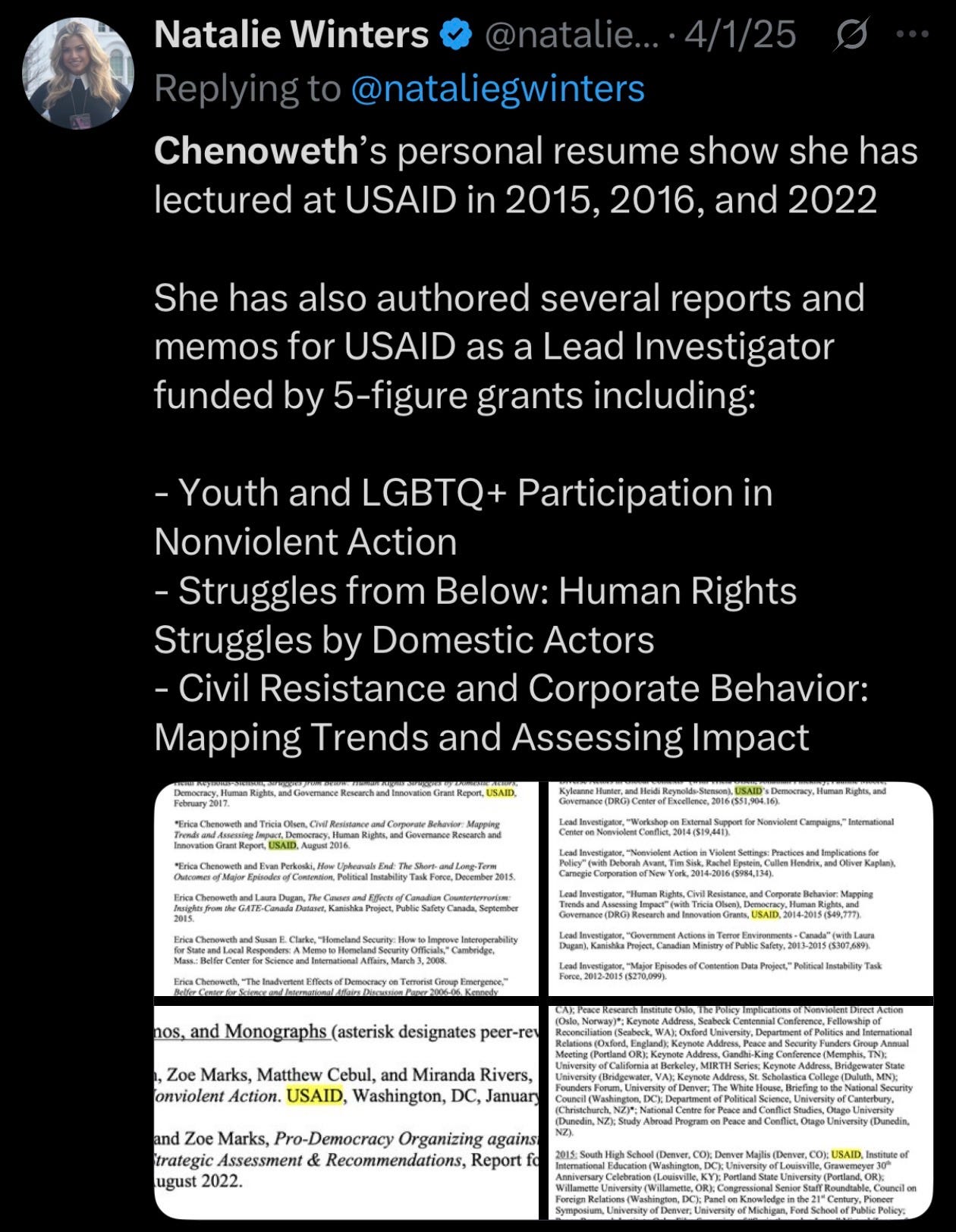
Chenoweth’s résumé also reflects years of collaboration with USAID–funded democracy initiatives abroad—programs that have historically fused activism, political pressure campaigns, and U.S. strategic objectives. The Ash Center workshop effectively imports that global protest infrastructure back into the United States, now enhanced with AI.
Engineering an AI Protest Infrastructure
The workshop’s conclusions were explicit. Participants called for:
Establishing a consortium modeled on Coders Without Borders to directly link AI developers with protest movements
Early and systematic AI training for activists and organizations
A coordinated research agenda to evaluate how AI affects protest outcomes
A Code of Conduct to normalize AI’s role in movement operations
AI as Command, Control, and Surveillance
The most striking passages describe how AI would be used before, during, and after protest actions:
“Some noted that AI could be used before, during, and after protest events and other contentious actions to monitor and analyze police and government responses, supporting organizers in planning and adapting logistical aspects, such as timing and escape routes. AI tools could even help track the location and tactical movements of allies and adversaries in real time.”
Participants openly discussed adopting the very tactics they typically condemn when used by governments:
“While repressive forces often use bots to undermine social movements, there’s potential for movements to apply similar techniques to infiltrate regimes or deplete their resources.”
The report also endorses predictive AI to identify “infiltrators, provocateurs, and other spoilers” before they act, alongside systems designed to monitor activist stress levels and provide psychological support to sustain long-term unrest.
The language throughout is telling. References to “intelligence gathering,” “power mapping,” “tracking adversaries,” and “predictive modeling” borrow directly from intelligence and military doctrine - not grassroots organizing.
Military Lessons, VR, and Emerging Technologies
The workshop went further, explicitly exploring the transfer of military methodologies into protest training:
“AI—sometimes coupled with virtual reality (VR) tools—could also help generate and expand access to information about techniques of nonviolent resistance… Moreover, lessons from current military uses of AI, such as sticking to plans under pressure and utilizing VR for training, could offer activists new methodologies in resilience and adaptability.”
Participants also flagged future technologies that could redefine protest dynamics including drones:
“Movements must devise strategies to stay ahead of technological developments… including VR and drones, which have not yet achieved widespread adoption despite their potential.”
The vision is clear: protests trained through simulations, coordinated through AI, and adapted in real time and modeled less on civic engagement than on operational command systems.
From Blueprint to Reality
Chenoweth herself acknowledged that these ideas are already being implemented:
“For instance, since the workshop took place, CANVAS launched their Activist Intelligence initiative. Social Movement Technologies has offered training workshops on AI. And… Cooperative Impact Lab’s AI for Organizing and Campaigns Hackathons took place before our workshop, in the summer of 2024.”
The workshop was not speculative. It was consolidating and accelerating a trend already underway.
The Inevitable Domestic Fallout
Once built, this infrastructure will not remain theoretical, nor will it stay confined to a handful of NGOs. AI-enabled protest coordination is uniquely scalable, easily replicable, and ideologically portable. Tools developed under the banner of “democracy movements” will inevitably metastasize across left-wing protest networks in the United States, from immigration activism to climate protests to election-related mobilization.
What the Ash Center calls democracy support may ultimately function as something far more destabilizing: an elite-sanctioned architecture for permanent, AI-driven political mobilization, now poised to be deployed not overseas, but at home.