
Washington has a new pitch for struggling American towns: turn their economic decline into an argument for more immigration.
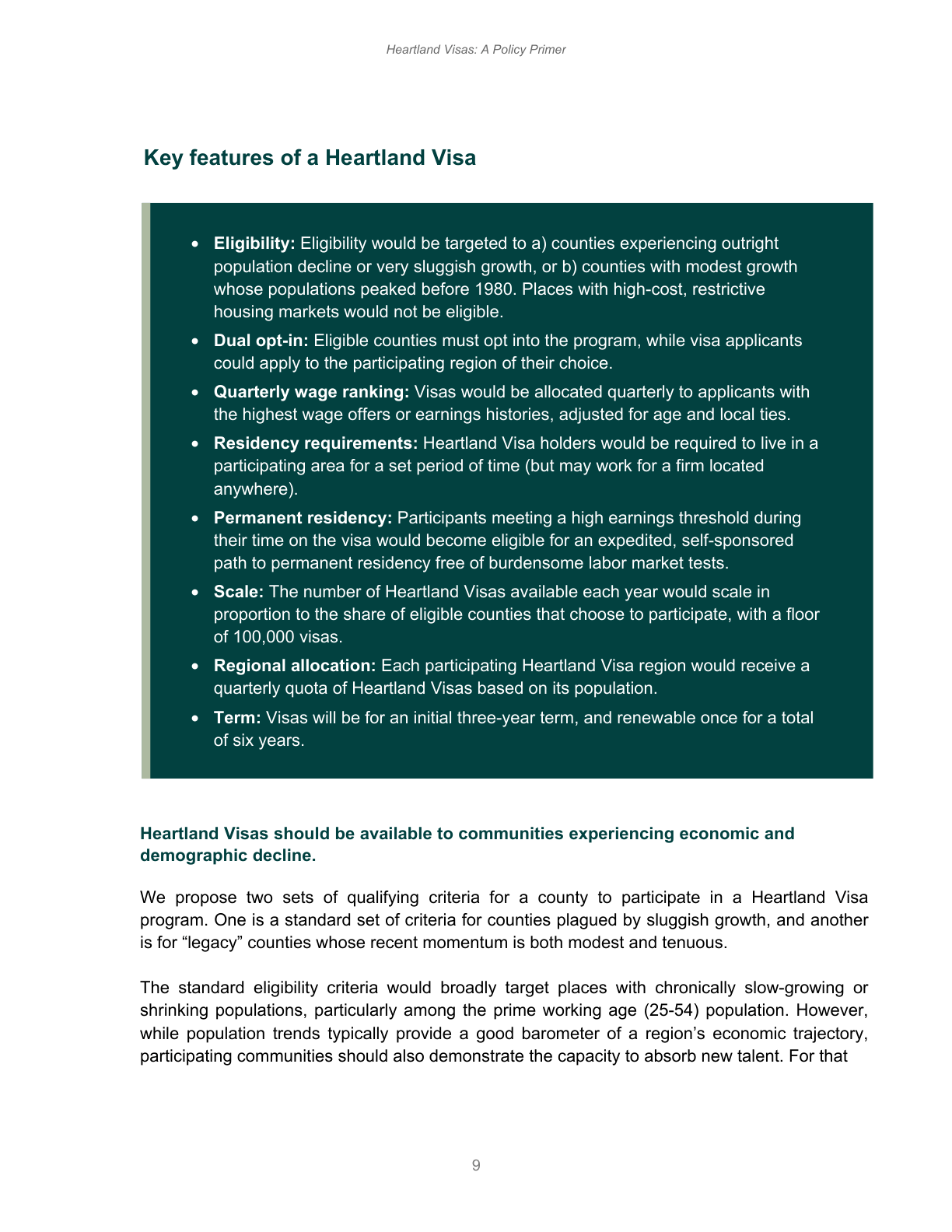
The Economic Innovation Group, a think tank co-founded by Facebook’s founding president Sean Parker, spells out the transaction in its Heartland Visa proposal:
“In exchange for living in a Heartland Visa community, workers with sufficient earnings will gain permanent residency”
A struggling town supplies the address. Washington supplies the immigration pathway. Foreign workers receive the prospect of a green card, while the Americans already living there receive another promise of economic revival.
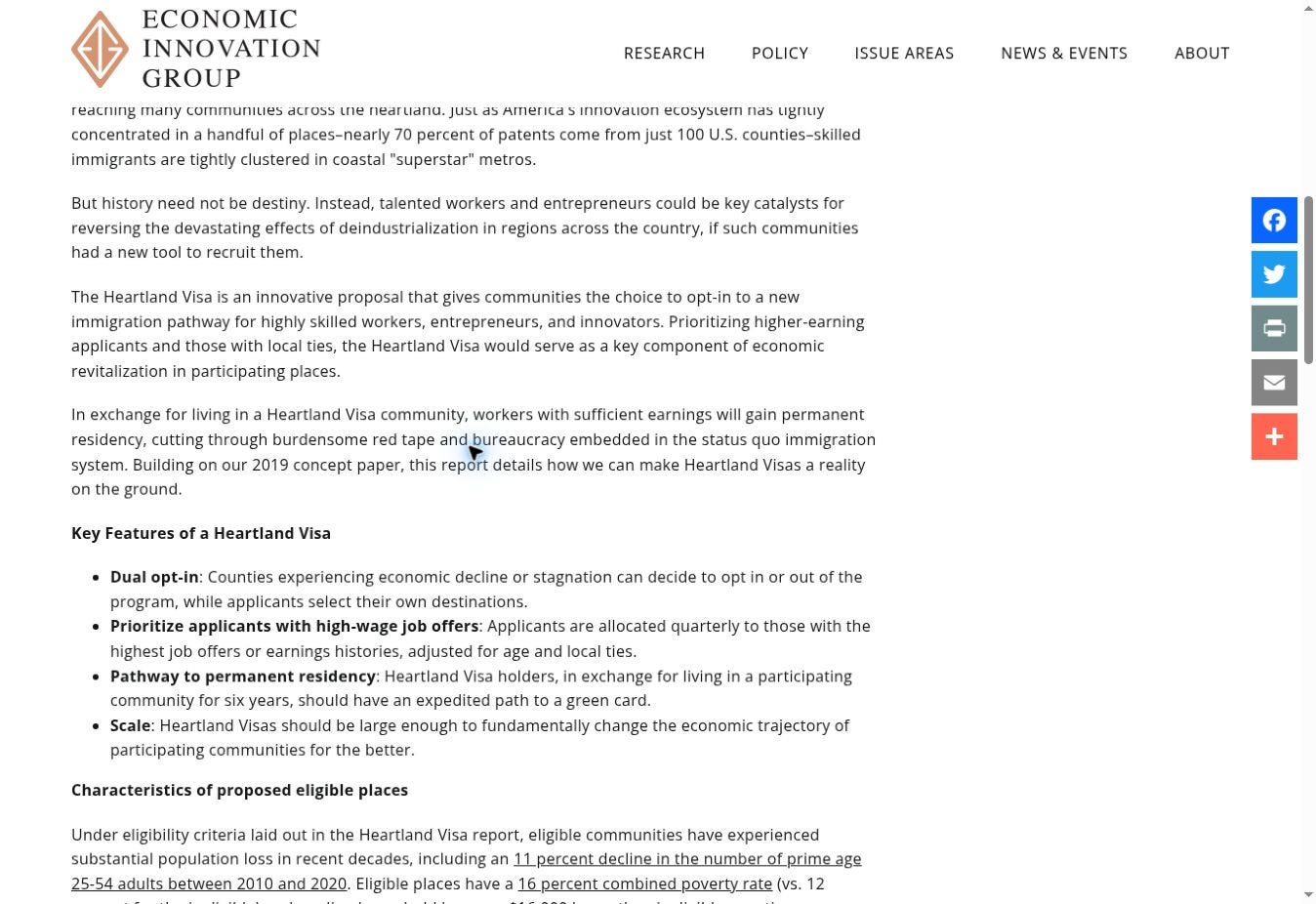
The ambition is national. EIG’s blueprint identifies more than 1,700 potentially eligible counties, home to 58 million people. It proposes a minimum of 100,000 visas annually.
These communities’ economic pain has become the sales pitch for changing who lives in them.
And the campaign is still being pushed in Washington.
EIG’s first-quarter 2026 lobbying disclosure lists Heartland Visas and the Heartland Visa Act of 2024. Its second-quarter filing, submitted July 20, names them again. Together, the filings report $360,000 in lobbying expenses across the organization’s policy agenda; they do not break out spending on this visa campaign.
The documents name John Lettieri and Catherine Lyons as lobbyists. This is an organized effort to turn a demographic proposal into federal policy.

Republican Senator Todd Young and then-Senator Joe Manchin, an independent, introduced the legislative version in December 2024. The documents examined here establish a proposal and continued lobbying, rather than an operating admissions program.
The introduced bill set the annual allocation at 50,000 principal visas, with unused visas carried forward. That is lower than EIG’s proposed minimum.
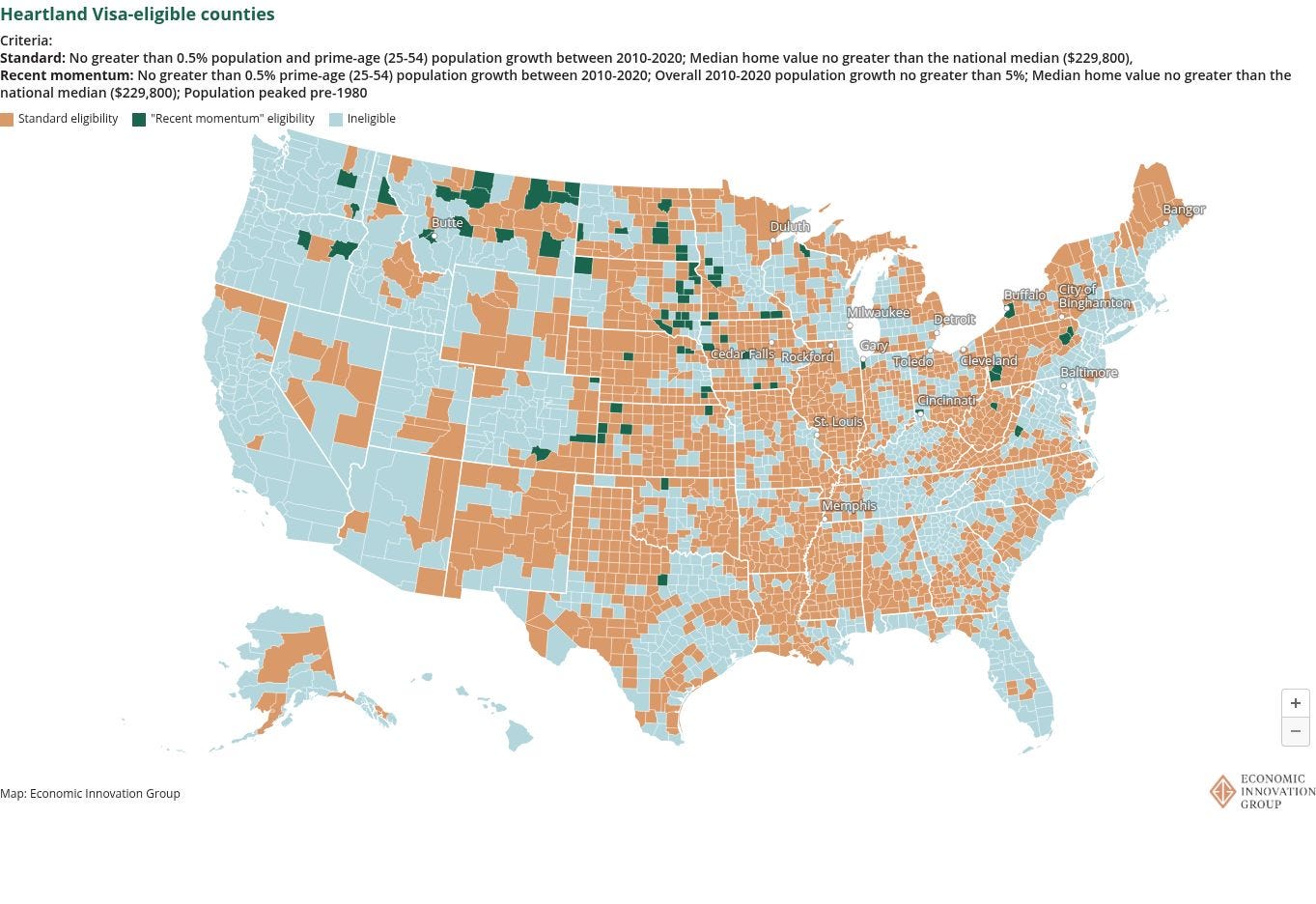
But the bill explicitly excludes visas for spouses and children from the principal-worker cap. The headline allocation would therefore understate how many people could arrive through the program.
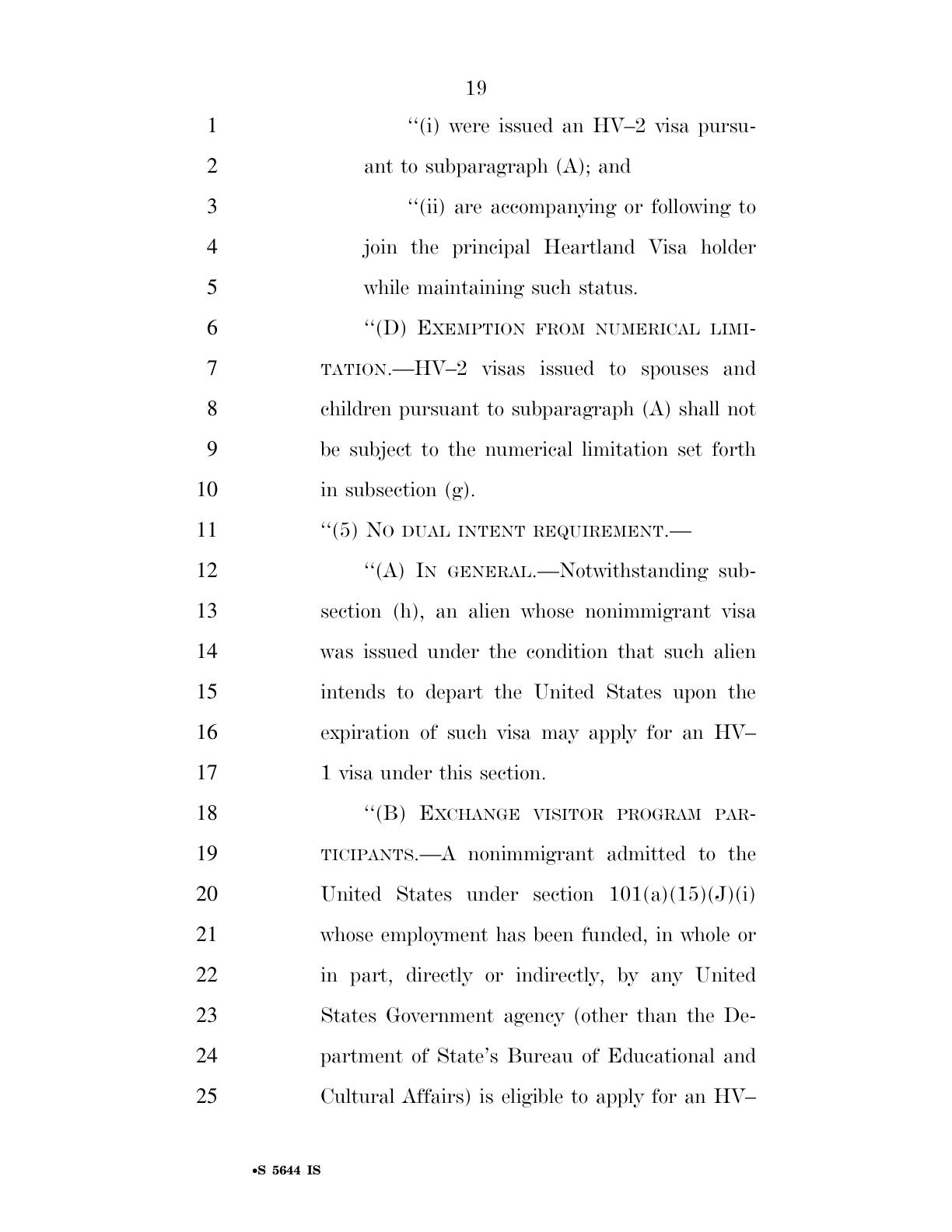
Participants could work for any employer in the United States while satisfying the residence requirement. A town could receive additional residents without the employer relocating there or opening a local operation.
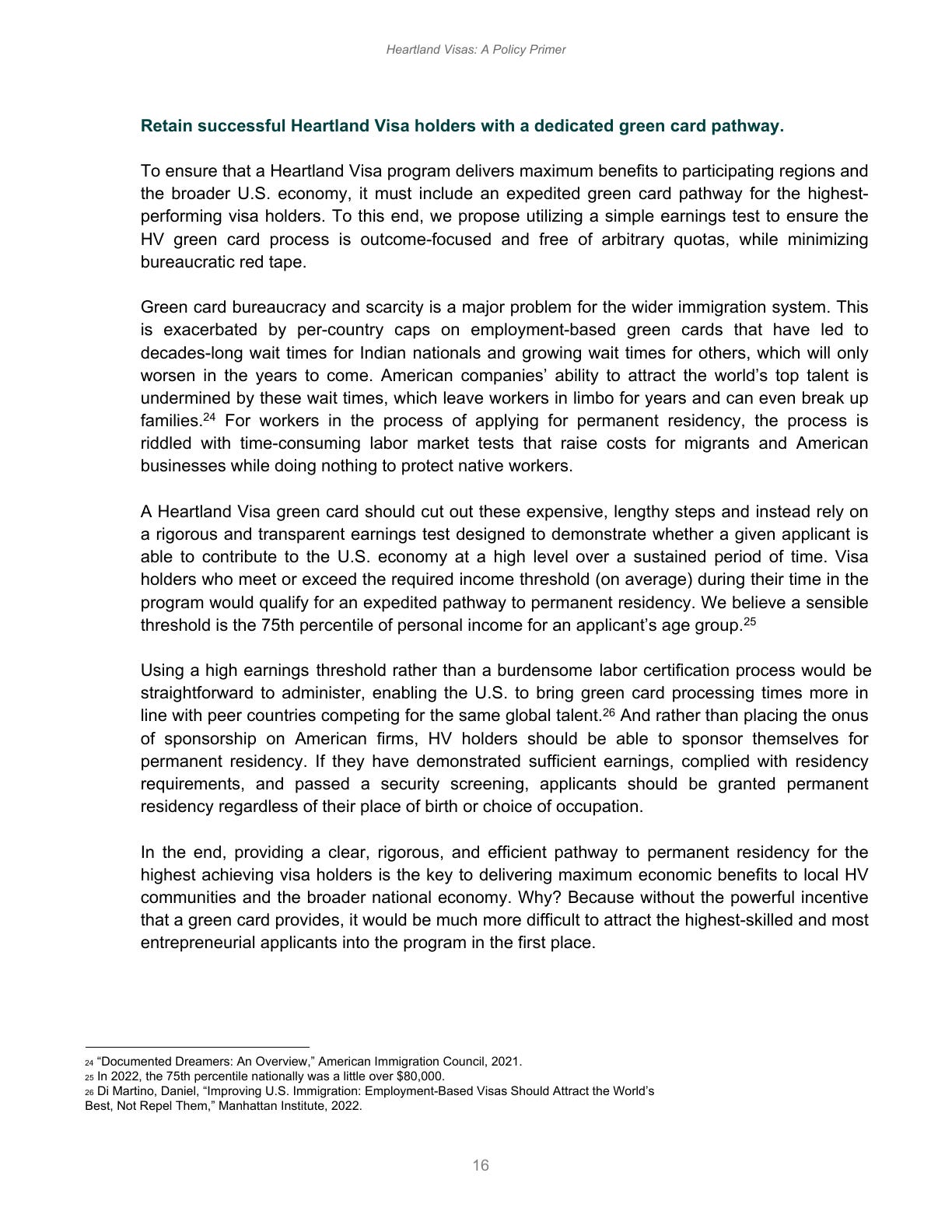
Qualifying workers could pursue permanent residence after the program’s six-year term. The resulting immigrant visas would be exempt from otherwise applicable numerical limits, including per-country caps.
EIG’s demographic ambitions are especially clear in its discussion of scale:
“Even 500,000 new residents per year would leave them far behind the total population growth of non-eligible places.”
The investors and political organizations backing this idea are prominent.
EIG’s honorary Founders Circle includes Parker, Ron Conway and Dan Gilbert. AOL co-founder Steve Case supplied an endorsement for the legislation in Young’s official support packet. Other supporters included Americans for Prosperity, the LIBRE Initiative, Engine and the Niskanen Center.
Local politicians have joined the campaign. Cleveland Mayor Justin Bibb introduced a 2024 U.S. Conference of Mayors resolution supporting Heartland Visas. Its co-sponsors included the then-mayors of Findlay, Huntington, Mesa, Moline, South Bend, St. Louis and Tucson.
Under the introduced bill, county authorities would have to authorize participation. It also limited participating counties to a combined existing population of 25 million—narrower than EIG’s eligibility map.
That local decision deserves scrutiny. Officials would be committing their communities to a federal immigration experiment whose effect on existing residents cannot be measured by counting arrivals.
The blueprint proposes replacing labor certification with an earnings test for the green-card pathway. Its authors argue high earnings would demonstrate an applicant’s economic contribution.
An immigrant’s salary, however, does not establish what happens to the wages, rents or prospects of the Americans around them. Those are the outcomes local officials should have to defend.
The pitch has even reached national-security policymaking. The National Security Commission on Emerging Biotechnology described Heartland Visas as complementary to its proposed biotechnology green cards, alongside a separate recommendation for stronger vetting.
Economic revival. Technological competition. Population growth. Each becomes another argument for expanding immigration into communities that have already endured upheaval.
The danger is that officials could declare a town rescued because its population and tax base grew, even if longtime residents faced higher costs or fewer opportunities. Those consequences need to be tested before enrollment, with projections that include family members, housing demand and public-service costs.
The Americans who stayed through their town’s decline should be the first people a recovery plan answers to. They should not have to gamble their community’s future on a Washington think tank’s promise that importing more workers will save it.
Meanwhile……Citizens beg for scraps.
President Donald Trump needs to eliminate all visa systems as well as doing an immigration moratorium