
Biden’s Department of Health and Human Services sent $151,590 to a marketing firm whose campaign “hand-picked” TikTok creators to recruit lawyers for illegal-alien minors fighting deportation.
The creators told millions of followers that attorneys could help those migrants remain in America. The campaign portrayed the immigration system as racist and deliberately built to deport people.
The posts disclosed a partnership with the Acacia Center for Justice. They did not tell viewers that HHS was paying the media contractor behind the campaign.
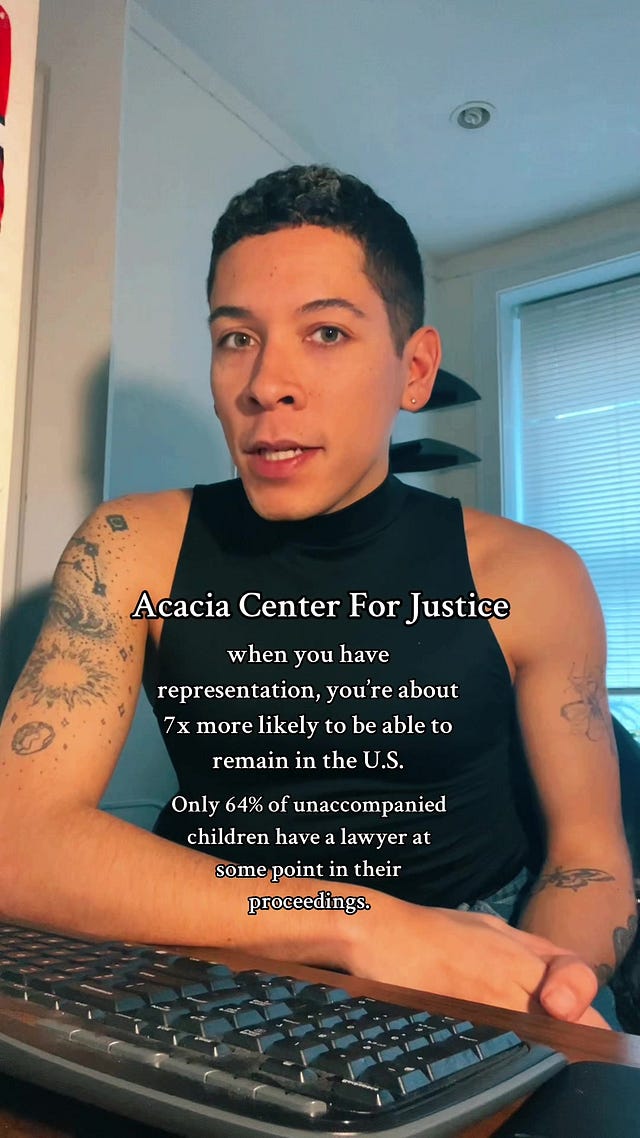
 Tiktok failed to load.
Enable 3rd party cookies or use another browser
The money trail
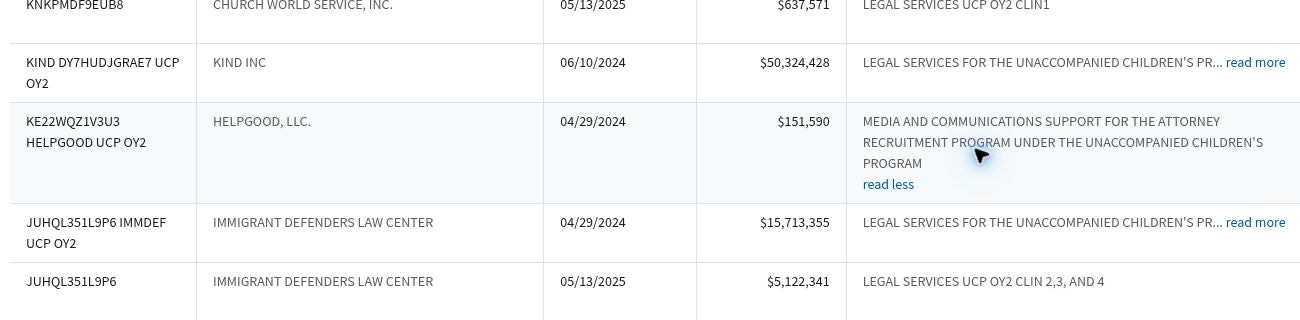
Federal spending records show the chain:
HHS → Acacia Center for Justice → HelpGood LLC → influencer content recruiting immigration lawyers.
The April 29, 2024 subaward paid HelpGood $151,590 for “media and communications support” for attorney recruitment under the federal Unaccompanied Children’s Program.
Federal law defines an unaccompanied alien child as a minor who “has no lawful immigration status” and lacks an available parent or guardian in the United States.
In plain English: HHS funded the marketing operation used to recruit lawyers who help illegal-alien minors resist deportation and stay in the country.
 Tiktok failed to load.
Enable 3rd party cookies or use another browser
They “hand-picked” the influencers
HelpGood says its Acacia work included influencer marketing, podcast promotion and paid media—not just job listings. The firm said it wanted to build solidarity with immigrant communities, fight alleged anti-immigrant misinformation and reach audiences outside “left-leaning” social-media bubbles.
In a Shorty Awards case study, HelpGood and Acacia said they “hand-picked two influencers” for long-term partnerships: TikTok lawyer Reb Masel and then-Columbia law student Jordan McMeans.
The influencers received campaign briefs. HelpGood said their “frustrated outrage” at the immigration system drove the content.
“Designed for exclusion—and deportation”
On June 27, Masel published a seven-minute Instagram video attacking Biden’s new asylum restrictions. She invoked America’s rejection of the M.S. St. Louis in 1939 and argued that the answer was to process asylum claims faster, “not to ban application.
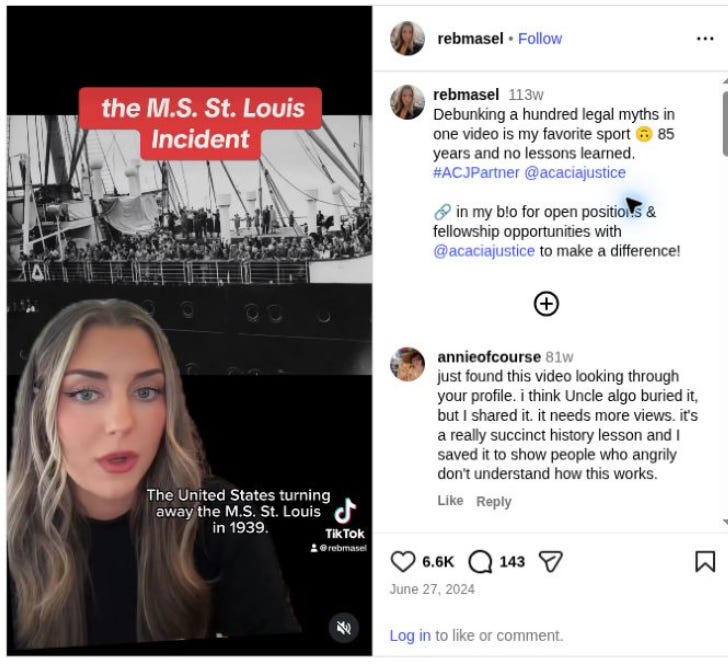
The post used #ACJPartner and directed viewers to Acacia jobs and fellowships.
Then came an entire taxpayer-linked podcast.
On October 4, Masel released “The Children: Alone in America”, an 80-minute episode with Acacia employees Amanda Doroshow and Lauren Esterle.
The episode told listeners that lawyers could help migrant children avoid deportation and remain in the United States. Masel addressed “build-the-wallers” and told them undocumented children have rights. The show called the immigration system “designed for exclusion … and deportation.” During a discussion of race and enforcement, Masel called America “racist, loud and racist.”
Listeners were directed to paid fellowships and jobs representing undocumented minors.
HelpGood later admitted its role, saying it engaged Masel to produce a one-hour podcast, standalone social videos and reactive content. Webby production credits list HelpGood as entrant, Masel as creator, a HelpGood employee as associate producer and Acacia staff as writers and guests.
What viewers were not told
Masel disclosed Acacia. The podcast thanked Acacia for making the episode possible. Neither disclosed the HHS money funding HelpGood’s media work.
But the larger money trail is documented: taxpayers funded the influencer operation used to recruit lawyers to keep illegal-alien minors from being deported.
GREAT JOB***
EXPOSING THE HIDDEN TACTICS & THINGS USED BY ANTI AMERICA ORGANIZATIONS, NAZI SOROS, COUNTRIES TO DESTROY IS VERY IMPORTANT IN FIGHT TO SAVE THIS NATION.
YOU ARE OPENING EYES ON THE EVIL OPERATIONS
The campaign’s organizers describe their strategy in plain terms: reach lawyers through people they already watch and trust. HelpGood says its work combined recruiting attorneys with building support for Acacia’s immigration programs. The creators received briefing sheets, kept control over their delivery, and directed viewers toward paid jobs and fellowships. Campaign organizers measured views, comments, and website visits, reporting a sharp increase in traffic after the videos appeared. These were planned promotional partnerships, disclosed through Acacia branding. The report’s central funding claim concerns another layer: whether federal money paid for the featured productions and whether that backing appeared in their disclosures.